








Most homeowners do not need a contractor every week. They need one at the worst possible time: a leaking water heater on a Sunday, a furnace that dies in January, a roof that starts dripping after a storm, a cracked driveway that has become a trip hazard, or a kitchen that has finally become more frustrating than functional. In those moments, the difference between a smooth project and a costly mess is rarely the brand of fixture or the color of shingles. It is the quality of the local contractor standing in the driveway.
This guide is written for homeowners who want to hire locally and hire well. It covers the five trades people search for most often-plumbers, HVAC technicians, roofers, concrete contractors, and remodelers-and the shared process that should sit underneath every hiring decision: verify credentials, define the scope in writing, compare comparable bids, and refuse pressure tactics. The goal is not to turn you into a building inspector. It is to give you enough fluency that you can ask better questions, spot weak estimates, and choose people who will still answer the phone after the final payment clears.
Why local contractors matter
National brands and online lead mills can be useful starting points, but homes are not abstract products. They sit on specific soil, under specific weather, inside specific building codes, and on streets that freeze, flood, or bake depending on the region. A contractor who works every week in your county usually understands those conditions better than a crew that arrives from three states away after a hailstorm.
Local knowledge shows up in small but expensive ways. A plumber who knows which neighborhoods still have galvanized supply lines or orangeburg sewer laterals will diagnose faster. An HVAC company that has balanced systems in homes like yours will be less likely to sell an oversized unit that short-cycles. A roofer who has seen how ice dams form on your street's roof pitches will pay more attention to ventilation and flashing. A concrete contractor who understands local freeze-thaw cycles will not pour a driveway that looks perfect in May and scales by the second winter. A remodeler who regularly pulls permits at your municipal building will know which inspectors are strict about egress windows, electrical panels, and load-bearing walls.
There is also an accountability advantage. A local company lives on reputation. Reviews accumulate in the same community where the owner shops, coaches, and bids the next job. That does not make every local firm honest. It does mean a homeowner has more leverage: public reviews, local licensing boards, supplier relationships, and the simple fact that the contractor cannot disappear as easily as a pop-up storm crew.
Hiring locally can support the regional economy, but the practical case is stronger than the sentimental one. Faster service calls, easier warranty follow-up, familiarity with local suppliers, and knowledge of municipal permit quirks all reduce project risk. The homeowner's job is to use that local market without confusing "nearby" with "qualified."
How to find and vet the right pro
The best contractor is often one you never find through a banner ad. Start with recent, specific referrals from neighbors who completed similar work, not vague praise from someone whose cousin "does construction." Ask what went wrong as well as what went right. A glowing review that cannot describe communication, cleanliness, or change-order handling is not very useful.
Then check public signals. Read recent Google, Angi, and Nextdoor reviews for patterns, not isolated complaints. One unhappy customer can happen. Repeated mentions of no-shows, surprise charges, or unfinished punch lists are a trend. Look up the company-not just the person who knocked on the door-on your state contractor licensing board. Confirm that the license is active, matches the trade, and is not buried under disciplinary actions. Ask for proof of general liability insurance and workers' compensation. If a worker is injured on your property and the company is uninsured, the legal and financial exposure can land on the homeowner.
Request three local references and actually call them. Ask whether the crew protected the house, whether the final cost matched the estimate, and whether the contractor returned to fix problems. For visual trades such as roofs, concrete, and remodeling, ask to see completed jobs of similar age and scope. A showroom photo of a kitchen is not the same as a three-year-old addition that has been through summer humidity and winter settlement.
Meet the person who will actually run the job when you can. Salespeople can be polished. Project managers and working owners reveal more about scheduling habits and problem-solving style. If a company cannot explain the work in plain language, keep looking. Complexity is not the same thing as competence.
Licenses, insurance, permits, and contracts
Licensing rules vary by state and city, but the principle is stable: the person performing regulated work should be authorized to do that work. Plumbing, electrical, HVAC, and structural remodeling are commonly licensed trades. Roofing and concrete rules are less uniform, which makes insurance and written scope even more important. Never accept a photocopy of an expired card or a license number that does not match the company name on the estimate.
Insurance is not paperwork theater. General liability covers property damage and some third-party injuries. Workers' compensation covers the crew. A certificate of insurance should come from the insurer or agent, not only from the contractor's printer. For larger jobs, ask to be named as an additional interest or certificate holder so you are notified if the policy lapses mid-project.
Permits exist to force inspections at the stages where mistakes are still visible. A contractor who offers to skip permits "to save you money" is offering to transfer risk to you. Unpermitted plumbing, mechanical, and remodeling work can complicate insurance claims and future home sales. The homeowner is often legally responsible for work done on the property, even if a contractor promised to handle the details.
A useful contract does not need legal poetry. It does need a clear scope of work, brand and grade of materials where it matters, start and substantial-completion targets, payment schedule tied to progress rather than charm, change-order process, cleanup expectations, warranty terms, and a statement about who pulls permits. Avoid large upfront deposits. A reasonable material deposit is common; a demand for most of the job cost before work begins is not.
Plumbers
Plumbing is hidden until it fails, and then it becomes urgent. Local plumbers handle leak repair, clogged drains, water heaters, fixture replacement, sewer line issues, gas line work in some jurisdictions, backflow prevention, and whole-house repiping. The best plumbing companies distinguish between true emergencies and work that can be scheduled. A burst pipe or sewage backup deserves same-day attention. A dripping faucet does not require a panic price.
Ask whether the technician is a licensed journeyman or master plumber and whether apprentices are supervised. Find out how the company prices service calls: flat-rate or hourly, diagnostic fee, and after-hours multiplier. Flat-rate books can be fair when the scope is clear; they can also hide padding if the diagnosis is vague. For water heaters, compare like with like: tank versus tankless, fuel type, capacity, venting requirements, expansion tanks, and local code upgrades that appear only after the old unit is pulled.
Sewer and slab-leak work deserves extra caution. Camera inspection is often worth the cost before anyone agrees to replace a buried line. If a plumber recommends breaking through a finished floor or digging up a yard, ask what less invasive options were considered and what warranty applies if the repair fails. Get the old parts or photos when major components are replaced. Homeowners should not pay for a "new" valve and later discover the old one was simply tightened.
Water quality and pressure problems are frequently misdiagnosed. Low flow may be a failing well pump, a clogged aerator, a partially closed meter valve, or mineral-choked pipes. A good local plumber tests before selling a whole-house filter array. Likewise, recurring clogged drains may be a venting problem, a belly in the line, or tree-root intrusion rather than a need for monthly chemical treatments. Chemicals can damage older pipes and rarely fix a structural defect.
Questions worth asking a plumber
- Are you licensed for this jurisdiction, and will the work be permitted if code requires it?
- What is included in the service call, and when does the clock start?
- Do you warranty parts and labor separately, and for how long?
- If you open walls or floors, who patches them?
- Will I receive a written description of the failed part and the replacement model number?
HVAC contractors
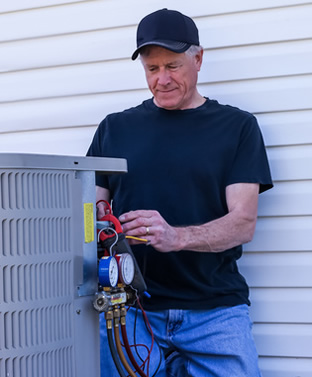
Heating, ventilation, and air conditioning systems are comfort equipment and energy equipment at the same time. A local HVAC contractor should be able to talk about both. The work ranges from seasonal tune-ups and capacitor replacements to full furnace, heat pump, or air-conditioner changeouts, duct repairs, thermostat upgrades, and indoor air quality add-ons such as media filters, ERVs, and humidity control.
The most expensive HVAC mistake is wrong sizing. A unit chosen only by square footage or by "whatever was there before" can be too large, cool the air too quickly, and leave the house clammy. It can also be too small and run without catching up on the hottest or coldest days. Ask whether the contractor performs a load calculation rather than a glance-and-guess. Ductwork matters as much as the box in the yard. Leaky, crushed, or undersized ducts will waste a high-efficiency system.
Maintenance contracts can be worthwhile when they include a real inspection, coil cleaning as needed, refrigerant-level checks where appropriate, safety controls, and priority scheduling. They are less useful when they are mainly a discount card for future replacements. During a replacement bid, compare SEER2 or HSPF2 ratings, matching indoor and outdoor components, warranty registration responsibilities, and whether the company uses its own installers or day labor. Installation quality determines whether the rated efficiency ever shows up on the utility bill.
Indoor air complaints-dust, uneven rooms, dry winter air, musty summer air-are often airflow and envelope issues as much as equipment issues. A thoughtful contractor will look at return paths, closed-register habits, attic insulation, and filtration before stacking gadgets onto a poorly performing system. If a salesperson leads with financing and ultra-violet lights instead of static pressure and duct leakage, slow the conversation down.
Roofers
A roof is a system: covering, underlayment, flashing, ventilation, drip edge, penetrations, and the deck underneath. Homeowners who buy only "shingles" often miss the parts that actually prevent leaks. Local roofers who stay in the same climate year after year tend to understand ice barrier requirements, wind ratings, valley treatment, and the difference between a manufacturer's material warranty and a workmanship warranty.
After hail or wind, insurance work introduces another layer of complexity. A reputable roofer can document damage and meet the adjuster without turning the homeowner into a prop in a claim-maximizing script. Be wary of anyone who asks you to sign an assignment of benefits without explanation, offers a free roof if insurance pays, or says no deposit is needed because "the insurance company will handle everything." You still own the contract. You still own the deductible. You still live with the workmanship.
Material choice should match roof structure, slope, budget, and neighborhood conditions. Asphalt shingles remain common because they are familiar and relatively affordable. Metal, tile, and specialty systems can last longer but require installers who know those systems, not a crew that mostly runs three-tab shingles. Ask how many layers will be torn off, whether rotten decking is priced as an allowance or a surprise, and how the company protects landscaping and interiors during tear-off. Nails in the driveway and granules in the gutters are not minor annoyances; they are signs of sloppy job-site habits.
Ventilation is the quiet killer of roofs. Inadequate intake and exhaust can cook shingles from below and create condensation problems in attics. A contractor who only talks about color and bundle count is not describing the system. Get the ventilation plan in the proposal. Also get a clear statement about flashing at chimneys, skylights, sidewalls, and pipe boots. Most leaks are not mysterious. They start at intersections.
Concrete contractors
Concrete looks simple from the street and is unforgiving in practice. Mix design, subgrade preparation, reinforcement, joint layout, finishing, and curing all decide whether a slab stays flat or becomes a map of cracks and standing water. Local concrete contractors should understand frost depth, drainage away from foundations, soil movement, and the way de-icing salts attack poorly finished surfaces.
Driveways, patios, sidewalks, garage slabs, and footing work are not interchangeable jobs. A decorative stamped patio and a structural garage floor have different load and finishing requirements. Ask what base material will be used, how thick the slab will be, whether wire mesh or rebar will be placed on supports rather than pulled up by guesswork, and how control joints will be cut. A low bid that skips base preparation is not a bargain. It is a future mudjacking or replacement project.
Timing matters. Concrete poured in extreme heat or cold needs protection. Curing is not optional. Homeowners who let a crew finish at dusk and then drive on the slab too soon, or who never keep the surface moist in hot weather, can ruin good work. A professional will explain when you can walk on it, drive on it, and seal it. If decorative color, stamping, or exposed aggregate is part of the design, ask to see weathered examples, not only fresh pours. Concrete changes as it cures and as it lives outdoors.
Drainage should be part of the conversation before forms go up. A beautiful patio that pitches toward the house will feed basement water problems. A driveway without a proper release at the sidewalk can pond and ice. Good local contractors think about where water goes after a two-inch rain, not only about how the finish looks while it is still wet.
Remodelers and general contractors
Remodeling sits at the intersection of design, structure, mechanical systems, and daily life. Kitchens, bathrooms, basements, and additions rarely involve a single trade. A capable remodeler or general contractor coordinates carpenters, plumbers, electricians, HVAC techs, tile setters, painters, and inspectors so the homeowner is not managing a parade of specialists who each believe the previous crew caused the delay.
Decide early whether you need a specialist or a generalist. A bath-only company may be perfect for a straightforward replacement and less ideal for a layout change that moves a drain, opens a bearing wall, and requires a new fan ducted to the exterior. Design-build firms can reduce friction when selections and construction live under one roof, but they still need a detailed allowance schedule. Allowances are where remodeling budgets go to disappear. If the bid assumes builder-grade fixtures and you want solid brass or custom cabinetry, the "unexpected" overage was predictable.
Phasing and occupancy need honest discussion. Living in a house during a kitchen remodel is possible and miserable if temporary cooking, dust control, and bathroom access are not planned. Ask how the company contains dust, where workers enter, how often a supervisor visits, and what happens when hidden problems appear behind walls. Older homes almost always hide something: undersized joists, ungrounded wiring, damp sheathing, out-of-level floors. The contractor's change-order process should be calm and written, not improvised at the end of a Friday.
Schedule optimism is common. Custom materials, inspector availability, and trade stacking all create slack. A remodeler who promises a full gut kitchen in two weeks is selling hope. Ask for a sequence, not just a completion date: demolition, rough mechanicals, inspection, insulation, drywall, finish carpentry, countertops, punch list. Payment should follow those stages. Keep a retainage until the punch list is actually finished, not merely promised.
Comparing quotes without getting lost
Homeowners often place three estimates side by side and compare only the total. That method rewards incomplete bids. Force the quotes onto the same scope. If one roofer includes ice barrier, ridge vent, and decking replacement up to two sheets, the cheaper bid that excludes those items is not cheaper. If one HVAC quote includes a new thermostat, pad, line set, and haul-away, compare those lines before celebrating a lower equipment price.
Ask each contractor to list exclusions. Exclusions are where professionals stay honest and amateurs stay vague. "Unforeseen wood rot," "electrical panel upgrades," "rock excavation," and "material price increases after X days" should be visible. A bid that says "repair as needed" is not a bid. It is an invitation to argue later.
Warranties should be read as two documents: the manufacturer's warranty and the installer's workmanship warranty. A 50-year shingle warranty does not help if flashing fails in year two and the installer is gone. A 10-year compressor warranty may require registered installation and regular maintenance. Get those conditions in writing.
Red flags and storm-chaser scams
Some warning signs are obvious and still catch people because the timing is stressful. Door-to-door solicitors after a storm, unmarked vans, pressure to sign today, requests for cash only, refusal to leave a written estimate, a license number that belongs to someone else, and a company address that is only a P.O. box are all reasons to stop. A contractor who wants a decision before you can call a reference is not offering a scarce opportunity. They are reducing your time to think.
Other red flags are quieter. A bid that arrives in an hour for a complex remodel is not impressive. A plumber who will not pull a permit for a water-heater replacement in a jurisdiction that requires one is not doing you a favor. An HVAC installer who never looks at the ducts is selling equipment, not comfort. A concrete crew that wants to pour over grass and roots is not preparing a base. A remodeler who cannot name the superintendent is leaving the job to whoever shows up.
Trust your notes more than your memory. After each estimate visit, write down whether the contractor was on time, whether they wore shoe covers, whether they looked in the attic or crawlspace, and whether they talked over you. Those small behaviors often predict the middle of the job better than a polished brochure.
A simple hiring checklist
If you remember nothing else, use this sequence. Define the problem in one paragraph. Gather three local names from referrals and public records. Verify license and insurance. Walk the job with each bidder. Demand written scopes that can be compared line by line. Check references from projects old enough to have aged. Agree on permits, payment stages, and warranty. Photograph the work area before demolition or tear-off. Pay the final invoice after the punch list, not before it.
Local contractors are not a romantic category. They are a market. Some are excellent, some are average, and some survive on the fact that homeowners hire in a hurry. The trades in this guide-plumbing, HVAC, roofing, concrete, and remodeling-reward patience more than charm. A watertight flashing detail, a correctly sized heat pump, a sewer repair that still flows in five years, a driveway that drains, and a kitchen that still functions after the trend colors fade are all the same achievement in different materials: work done by someone who expects to keep living in the same town as their customers.
Hire as if you will need that person again. You probably will.